

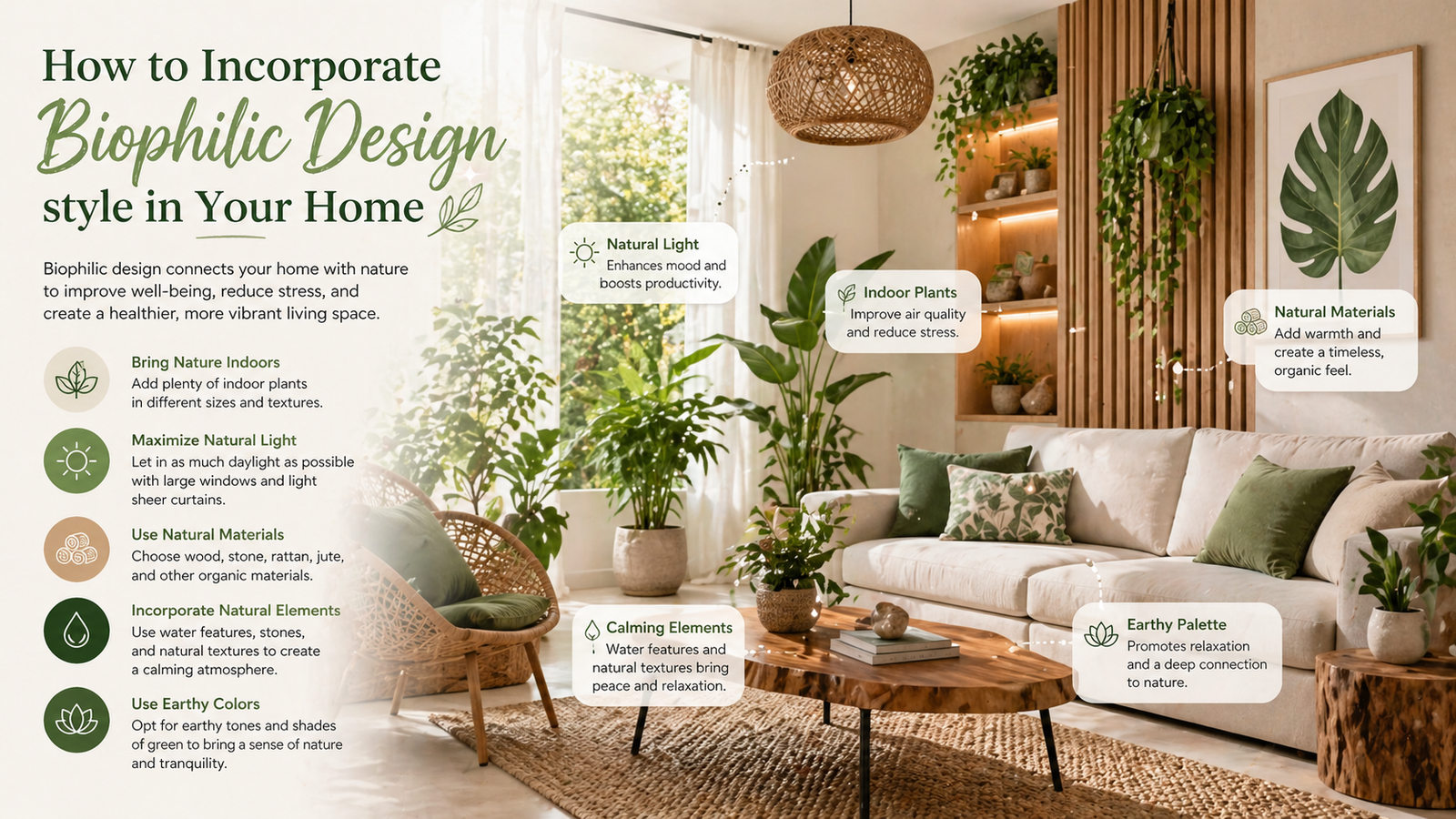
Do you ever feel like your home is just a box that keeps you away from the world? Many of us spend our days trapped under artificial lights, staring at screens, and feeling a deep, quiet longing for the natural world. It is easy to lose our sense of balance when we are disconnected from the earth.
Bringing the outdoors inside is more than just a trend; it is a way to reclaim your peace of mind. By embracing a Biophilic Design style, you can transform your living space into a restorative sanctuary. This approach focuses on natural light, organic textures, and living plants to help lower stress and boost your daily energy.

Creating this environment is not just about aesthetics. It is about building a home that actively supports your mental and physical health. When you invite nature into your rooms, you create a nurturing atmosphere that helps you thrive every single day.
Key Takeaways
- Nature-inspired interiors significantly reduce daily stress levels.
- Natural light is essential for maintaining a healthy circadian rhythm.
- Adding indoor plants improves air quality and boosts your mood.
- Organic materials like wood and stone create a grounding, calm environment.
- A restorative home layout supports both mental clarity and physical wellness.
Understanding the Core Principles of Biophilic Design style
The core of biophilic design style lies in our deep-seated evolutionary history with the natural world. For thousands of years, humans thrived in outdoor settings, developing a biological need to remain close to living systems. Today, we often spend most of our time indoors, which can lead to a sense of detachment from the environment that once sustained us.

The Human Connection to Nature
Our brains are hardwired to respond positively to natural patterns, textures, and light. When we incorporate nature-inspired architecture into our homes, we are not just decorating; we are fulfilling a primal requirement for well-being. This connection helps us feel grounded and secure in our personal spaces.
By mimicking the complexity of the outdoors, we create a sensory experience that feels inherently right. This approach moves beyond simple aesthetics to address how our bodies physically react to our surroundings. It is about creating a bridge between the built environment and the wild world we evolved to inhabit.
Psychological Benefits of Natural Environments
Living in a space that prioritizes natural elements can significantly improve your mental health. Research shows that exposure to nature-inspired architecture reduces cortisol levels, which helps lower stress and anxiety. When your home reflects the patterns of the earth, your mind finds it easier to rest and recover from the demands of daily life.
The psychological advantages of this design philosophy are numerous and impactful. Consider these key benefits for your home:
- Enhanced mood: Natural light and organic shapes promote feelings of happiness and contentment.
- Improved focus: A connection to nature helps clear mental fatigue and boosts cognitive function.
- Reduced stress: Soft textures and natural materials create a calming atmosphere that lowers blood pressure.
- Better sleep: Aligning your home with natural light cycles supports your body’s internal clock.
Ultimately, adopting a biophilic design style is an investment in your long-term comfort. By making informed choices that honor our biological needs, you can turn any room into a peaceful sanctuary. This intentional approach ensures that your home supports your mental clarity and emotional health every single day.
Maximizing Natural Light for a Healthier Home
Sunlight is the most vital element for creating truly wellness-focused spaces in your home. Exposure to natural light helps regulate your circadian rhythms, which directly improves your sleep quality and daytime energy levels. By inviting more sun into your living areas, you create a vibrant atmosphere that supports both physical and mental health.

Strategic Window Placement and Treatments
The way you arrange your furniture plays a significant role in how light travels through a room. You should aim to keep pathways to windows clear, allowing sunlight to penetrate deep into your living area. Positioning your seating or workspace near a window can provide a refreshing boost of natural light throughout the day.
Choosing the right window treatments is equally important for maintaining a balance between privacy and brightness. Opt for sheer curtains or light-filtering blinds that soften harsh glare while still allowing plenty of illumination to enter. These choices are essential when designing wellness-focused spaces that feel open and airy.
- Use light-colored, translucent fabrics to diffuse sunlight.
- Install adjustable blinds to control the intensity of light during peak hours.
- Keep window sills free of clutter to maximize the surface area for light entry.
Using Mirrors to Amplify Daylight
If your home has darker corners, mirrors act as a simple and effective tool to brighten the environment. By placing a mirror directly opposite a window, you can reflect incoming light into areas that would otherwise remain dim. This technique creates a sense of depth and makes smaller rooms feel significantly more expansive.
Consider using large, decorative mirrors to serve as both a functional light source and a stylish focal point. When you strategically position these reflective surfaces, you enhance the overall brightness of your home without needing extra electricity. This approach is a hallmark of wellness-focused spaces that prioritize natural harmony.
| Treatment Type | Light Level | Privacy Level | Best Use |
|---|---|---|---|
| Sheer Curtains | High | Low | Living Rooms |
| Roller Shades | Medium | High | Bedrooms |
| Wooden Blinds | Adjustable | High | Home Offices |
| Frosted Film | Medium | Maximum | Bathrooms |
Integrating Indoor Plants and Living Walls
Creating wellness-focused spaces is easily achievable when you invite nature indoors through strategic plant placement. Bringing greenery into your home does more than just improve the aesthetic appeal of a room. It acts as a natural filter, effectively cleaning the air while fostering a deep sense of calm in your daily environment.
Selecting Low-Maintenance Air-Purifying Plants
You do not need a green thumb to enjoy the benefits of a lush indoor garden. Many resilient species thrive with minimal attention, making them perfect for busy homeowners who want to improve their indoor air quality without constant upkeep.
Consider adding these hardy, air-purifying favorites to your collection:
- Snake Plant: Known for its ability to convert carbon dioxide into oxygen at night.
- Golden Pothos: A trailing vine that is incredibly difficult to kill and grows quickly.
- ZZ Plant: Thrives in low-light conditions and requires very infrequent watering.
- Spider Plant: Excellent at removing toxins like formaldehyde from the air.
Creative Vertical Gardening Solutions
When floor space is limited, vertical gardening offers a brilliant way to maximize your greenery. By utilizing walls, you can transform a sterile room into a vibrant, living environment that feels both expansive and cozy.
Wall-mounted planters and modular shelving systems allow you to stack plants in a way that draws the eye upward. This technique is essential for building wellness-focused spaces in smaller apartments or urban homes. Whether you choose a simple hanging trellis or a sophisticated moss wall, these vertical features add dynamic texture and life to any blank wall in your home.
Utilizing Natural Materials and Textures
Transforming your living space into a sanctuary starts with the thoughtful selection of natural materials. These elements provide a tactile, sensory-rich experience that synthetic alternatives simply cannot replicate. By inviting the raw beauty of the earth into your rooms, you create a home that feels both grounded and deeply authentic.
Incorporating Sustainable Wood and Stone
Wood and stone serve as the foundation for a biophilic home. Using reclaimed timber for flooring or furniture adds an immediate sense of warmth and history to any room. These natural materials age gracefully, developing a unique patina that tells a story over time.
Stone accents, such as slate hearths or marble countertops, introduce a cool, solid contrast to the softness of wood. This balance mimics the diverse textures found in a forest or mountain landscape. When you prioritize sustainability, you ensure that your design choices support the health of the planet while enhancing your own well-being.
“Nature does not hurry, yet everything is accomplished.”
— Lao Tzu
The Role of Natural Textiles like Linen and Wool
Beyond hard surfaces, the textiles you choose play a critical role in defining the comfort of your home. Linen offers a light, breathable quality that feels crisp and clean, making it perfect for window treatments or bedding. In contrast, wool provides a cozy, insulating layer that invites you to relax and unwind.
Layering these organic fabrics creates depth and visual interest within your living space. By mixing the rough texture of a wool throw with the smooth drape of linen curtains, you engage your senses in a way that promotes relaxation. Embracing these natural materials allows you to craft a cohesive environment that feels perfectly in tune with the rhythms of the natural world.
Bringing Water Elements into Your Living Space
The rhythmic sound and gentle sight of water offer a profound way to calm the human nervous system. By integrating these biophilic elements into your home, you create a sanctuary that promotes relaxation and mental clarity. You do not need a complex plumbing system to enjoy the restorative power of water in your daily life.
Small-Scale Indoor Fountains and Water Features
Tabletop fountains serve as an excellent entry point for those looking to introduce soothing auditory experiences into their living rooms or home offices. These compact devices provide a constant, gentle trickle that masks background noise and helps you focus. Many modern designs are self-contained, meaning they require nothing more than a standard electrical outlet to function.
When selecting a fountain, consider the material and the flow pattern to ensure it complements your existing decor. Stone or ceramic basins often provide a more natural aesthetic, while glass or metal options offer a sleek, contemporary look. Regular maintenance, such as keeping the water clean and the pump clear of debris, ensures your feature remains a peaceful focal point.
Visual Representations of Water through Art and Decor
If a physical water feature is not practical for your space, you can still harness the psychological benefits of water through visual art. High-quality photography or abstract paintings depicting flowing rivers, calm lakes, or crashing ocean waves can evoke a similar sense of serenity. These biophilic elements act as a visual anchor, reminding the brain of the natural world even when you are indoors.
Consider using textiles or wall art that mimic the fluid patterns of water to enhance the atmosphere. You might choose curtains with soft, rippling textures or decorative pillows in shades of deep blue and seafoam green. These subtle additions help bridge the gap between your interior design and the calming influence of nature.
| Feature Type | Primary Benefit | Maintenance Level |
|---|---|---|
| Tabletop Fountain | Auditory relaxation | Moderate |
| Water-themed Art | Visual tranquility | Low |
| Textured Decor | Tactile connection | Low |
Ultimately, the goal is to curate a space that feels balanced and restorative. By thoughtfully placing these biophilic elements throughout your home, you foster a deeper connection to the environment. Whether through the sound of a fountain or the sight of a seascape, water remains a powerful tool for modern interior design.
Optimizing Airflow and Ventilation
Achieving a balanced indoor climate starts with how your home breathes. Proper ventilation is vital for maintaining a healthy home environment and preventing the buildup of indoor pollutants. By focusing on an eco-friendly design, you can ensure your living space remains fresh and comfortable throughout every season.
Natural Cross-Ventilation Techniques
Cross-ventilation is one of the most effective ways to refresh your home without relying on mechanical systems. By opening windows on opposite sides of a room, you create a pressure difference that pulls fresh air through the space. This simple method naturally regulates temperature and clears out stale air.
To maximize this effect, consider the placement of your windows and doors. Aligning openings to catch prevailing breezes can significantly improve airflow. Strategic placement allows you to enjoy a gentle, cooling breeze even on warmer days, reducing the need for artificial cooling.
Improving Indoor Air Quality with Eco-Friendly Materials
The materials you choose for your home play a massive role in the quality of the air you breathe. Many conventional building products release volatile organic compounds, or VOCs, which can degrade your indoor environment. Opting for an eco-friendly design means selecting materials that do not off-gas harmful chemicals into your living area.
Prioritize natural, breathable materials like solid wood, stone, and organic cotton. These choices support a healthier atmosphere by allowing your home to regulate moisture levels naturally. By avoiding synthetic finishes, you create a sanctuary that is both beautiful and safe for your family.
Choosing Earth-Inspired Color Palettes
Transforming your living space into a sanctuary starts with selecting a palette inspired by the natural world. The colors you surround yourself with daily dictate the mood and energy of your home. By mimicking the shades found in forests, skies, and landscapes, you can create wellness-focused spaces that feel grounded and serene.
Applying Biophilic Hues in Different Rooms
Different rooms benefit from specific natural tones to enhance their function. For instance, deep forest greens work beautifully in bedrooms to promote restful sleep and relaxation. In contrast, soft sky blues are perfect for home offices, as they encourage clarity and focus.
Sandy neutrals and warm terracotta shades serve as excellent base colors for living areas. These hues provide a neutral backdrop that allows other natural elements to shine. Using these colors helps establish wellness-focused spaces that feel both inviting and connected to the earth.
Balancing Warm and Cool Tones for Harmony
Achieving a sense of balance is essential when designing with nature-inspired colors. You should aim to pair cool tones, like slate gray or sage, with warmer accents such as honey-toned wood or cream textiles. This contrast prevents a room from feeling too sterile or overwhelming.
When you successfully blend these temperatures, you create a harmonious environment that supports your mental health. A well-balanced room feels intentional and calm, which is the hallmark of wellness-focused spaces. Consider the following guide to help you select the right palette for your home:
| Room Type | Primary Color | Accent Color | Desired Mood |
|---|---|---|---|
| Bedroom | Forest Green | Warm Beige | Calm & Restful |
| Living Room | Sandy Neutral | Terracotta | Warm & Social |
| Home Office | Sky Blue | Soft White | Clear & Focused |
| Kitchen | Stone Gray | Sage Green | Fresh & Clean |
Creating Seamless Indoor-Outdoor Connections
Achieving a harmonious indoor-outdoor connection is the secret to making any home feel more spacious and serene. By removing the visual barriers between your living room and your garden, you invite nature to become a permanent part of your daily life. This approach creates a sense of flow that refreshes the mind and body.
Designing Functional Patios and Balconies
Your outdoor space should function as a natural extension of your interior living area. Start by selecting weather-resistant furniture that mirrors the comfort and style of your indoor pieces. Comfort is key when you want to encourage yourself to spend more time outside.
Consider adding a small dining set or a cozy reading nook to your balcony to maximize utility. When these areas are well-planned, they serve as extra rooms that provide a breath of fresh air. Proper lighting is also essential to ensure these spaces remain usable after the sun goes down.
Using Biophilic Elements to Blur Boundaries
You can easily soften the transition between spaces by using consistent flooring materials. Extending the same tile or wood finish from your living room onto your patio creates a visual bridge that makes the home feel larger. This simple trick is one of the most effective biophilic elements for creating unity.
Incorporate lush greenery near the threshold to further blur the lines between inside and outside. Placing potted plants at the edge of your doorway helps the eye travel naturally from the interior to the exterior landscape. This indoor-outdoor connection fosters a deeper sense of peace and environmental awareness.
| Strategy | Primary Benefit | Implementation Tip |
|---|---|---|
| Consistent Flooring | Visual Expansion | Use matching materials inside and out. |
| Vertical Greenery | Natural Softening | Install wall-mounted planters near doors. |
| Glass Doors | Light Flow | Choose large, unobstructed panels. |
| Cohesive Decor | Unified Aesthetic | Match color palettes across both zones. |
Selecting Furniture with Organic Shapes
Embracing organic silhouettes is a transformative way to bring the essence of the outdoors inside your living space. When you curate your home, the shapes of your furniture can significantly impact your daily comfort and overall well-being. By drawing inspiration from nature-inspired architecture, you can create a home that feels both grounded and fluid.
Prioritizing Ergonomics and Natural Forms
True comfort begins with furniture that supports the human body while mirroring the beauty of the natural world. Look for pieces that feature gentle curves and rounded edges rather than rigid, boxy structures. These designs often utilize natural materials like sustainably sourced wood, rattan, or organic cotton to enhance the tactile experience.
Ergonomics should never be sacrificed for aesthetics. A well-designed chair or sofa should cradle your body, encouraging you to relax and unwind after a long day. When your furniture mimics the fluid forms found in forests or along riverbeds, it creates a harmonious connection between your interior environment and the world outside.
Avoiding Harsh Lines for a Soothing Atmosphere
Sharp corners and aggressive angles can often create a sense of visual tension in a room. To foster a truly soothing atmosphere, focus on selecting items that promote a sense of flow and ease. By moving away from industrial, rigid shapes, you allow the eye to travel smoothly across your living space.
Incorporating pieces with soft, organic shapes helps to soften the overall look of your home. This approach to nature-inspired architecture ensures that your living area remains a peaceful retreat. By choosing natural materials that feel warm to the touch, you further enhance the sense of calm and tranquility in your sanctuary.
Implementing Sustainable Interior Design Practices
Sustainable interior design is more than a trend; it is a commitment to the health of our planet. When you align your home decor with the rhythms of nature, you create a living space that supports both your well-being and the environment. By adopting green building principles, you ensure that your home remains a sanctuary for years to come.
Sourcing Eco-Friendly and Recycled Materials
Choosing the right materials is the foundation of any eco-friendly design project. Look for items crafted from reclaimed wood, bamboo, or recycled glass to minimize waste. These materials often carry a unique history and character that mass-produced items simply cannot replicate.
You should also prioritize products with low volatile organic compound (VOC) finishes. These choices improve your indoor air quality while supporting manufacturers who value the earth. Sourcing locally is another excellent way to reduce the environmental impact of shipping and transportation.
Reducing Your Carbon Footprint at Home
Reducing your carbon footprint at home involves making intentional decisions about energy and consumption. Start by investing in high-quality, durable furniture that stands the test of time rather than replacing items frequently. This approach is a core tenet of sustainable interior design that prevents unnecessary landfill waste.
Consider the following ways to enhance your home’s efficiency:
- Choose energy-efficient lighting fixtures to lower electricity usage.
- Select textiles made from organic, renewable fibers like hemp or organic cotton.
- Incorporate green building principles by improving insulation to maintain natural temperatures.
Ultimately, your commitment to eco-friendly design creates a ripple effect of positive change. Every small adjustment you make contributes to a healthier home and a more sustainable future for everyone. By focusing on longevity and natural resources, you turn your house into a true reflection of environmental stewardship.
Conclusion
Adopting a Biophilic Design style represents a meaningful shift toward a healthier way of living. You create a personal sanctuary that nurtures your mental and physical well-being by prioritizing your connection to the natural world.
Every small change contributes to a larger impact on your daily mood and energy levels. Embracing sustainable interior design allows you to craft a home that respects the planet while providing a restorative retreat from the busy pace of modern life.
Begin your journey by selecting one or two elements that resonate with your personal aesthetic. You might choose to add a single organic texture or introduce more daylight into your favorite reading nook.
Consistency matters more than speed when building this environment. Your home will evolve into a space that feels both grounded and vibrant as you continue to layer these nature-inspired choices.
Share your progress with friends or family to inspire others to explore these concepts. Your commitment to a Biophilic Design style serves as a powerful example of how intentional living improves quality of life. Start your transformation today and enjoy the lasting peace that comes from a home in harmony with nature.
FAQ
What is the primary goal of adopting a biophilic design style in my home?
The main objective is to bridge the gap between modern indoor living and the natural world. By creating wellness-focused spaces, we can lower stress and improve our physical health. Brands like Interface have pioneered this movement, proving that integrating nature into our daily surroundings is essential for a balanced, restorative lifestyle.
How does nature-inspired architecture influence my daily mood?
This approach taps into our innate biological need to be near nature. Research from firms like Terrapin Bright Green shows that nature-inspired architecture can significantly reduce cortisol levels and boost cognitive function. By making informed design choices, you create a home that supports long-term mental clarity and emotional comfort.
What are the best ways to maximize natural light if my home feels dark?
You can start by using strategic window treatments, such as sheer linens from The Citizenry, to let light filter in while maintaining privacy. Additionally, placing large mirrors from West Elm opposite windows will amplify daylight, helping to regulate your circadian rhythms and brighten even the dimmest corners for a more eco-friendly design.
Which indoor plants are best for someone without a green thumb?
If you are new to greenery, look for low-maintenance air-purifying plants like the Snake Plant or ZZ Plant from The Sill. For those wanting to make a bolder statement, a living wall system from SageGreenLife can transform a plain room into a vibrant, oxygen-rich sanctuary, effectively utilizing biophilic elements to refresh your air.
Why should I prioritize natural materials like wood and stone in my interior?
Natural materials offer a tactile, sensory experience that grounded us to the earth. Incorporating reclaimed wood flooring from Pergo or wool textiles from Faribault Mill adds a layer of authenticity and warmth. These elements are a cornerstone of sustainable interior design, ensuring your home feels connected to the environment.
Can I benefit from water features if I have a small living space?
Absolutely! Small-scale tabletop fountains from Bernini Fountains provide the soothing sound of flowing water, which calms the nervous system. If you prefer a lower-maintenance option, hanging high-quality art from Art.com that depicts serene landscapes or water can offer similar psychological benefits through visual biophilic elements.
How do I improve my home’s air quality using green building principles?
Beyond adding plants, you can follow green building principles by choosing materials that don’t off-gas. Use Low-VOC paints from Benjamin Moore and prioritize natural cross-ventilation by keeping windows clear. This approach ensures your home remains fresh and free from common indoor pollutants.
How do I choose a color palette that feels truly biophilic?
Look to the outdoors for inspiration and select earth-inspired hues. Using colors like Sherwin-Williams’ “Evergreen Fog” or soft sandy neutrals creates a harmonious atmosphere. Balancing these warm and cool tones allows you to design wellness-focused spaces that feel both inviting and visually grounded.
What is the best way to create a seamless indoor-outdoor connection?
To blur the lines between inside and out, consider installing large glass doors from NanaWall that open onto a functional patio. Using consistent flooring materials and placing similar biophilic elements on both sides of the glass makes your living area feel significantly larger and more open to the natural world.
Why is furniture with organic shapes preferred in biophilic design?
Nature rarely moves in straight lines. Selecting furniture with soft curves, like the iconic designs from Herman Miller, reflects the fluid forms found in nature-inspired architecture. These organic shapes prioritize ergonomics and help avoid harsh lines, resulting in a more soothing and relaxed domestic atmosphere.
How can I implement sustainable interior design practices on a budget?
Focus on sourcing eco-friendly or recycled materials through platforms like Etsy Reclaimed. By choosing high-quality, long-lasting pieces and supporting brands that follow green building principles, you can reduce your carbon footprint while creating a beautiful, nature-connected home that stands the test of time.